Cleaning Built Around Security Access and Compliance
Bank and financial institution cleaning in Cape Girardeau for facilities that require after-hours service and documented crew accountability
Banking and financial institutions present cleaning requirements that most commercial spaces do not—restricted access points, teller station surfaces that must be sanitized without disturbing cash-handling equipment, and an operational schedule that leaves a narrow window between closing and the next morning's opening. LRE Cleaning Service LLC cleans banks and financial institutions in Cape Girardeau with a crew structure built around those constraints, using W2 employees covered by workers' compensation rather than independent contractors, which matters to institutions that vet who enters their facilities after hours. Every crew member working in a bank location is a direct employee of the business, not a subcontractor arranged at variable intervals.
The process begins with a walkthrough during business hours to map the space, identify security access points, and document any detail requirements specific to the institution's standards. Cleaning is scheduled after closing—typically beginning at 3:30 PM or later—and covers restroom sanitizing, floor mopping, trash removal, surface dusting, and detailed cleaning around teller stations and customer-facing areas. The teller station work is handled with particular attention because those surfaces contact both cash and customers continuously throughout the banking day, and residue accumulates in corners and equipment edges that a surface wipe alone does not address.
Schedule a walkthrough to review your facility's security access requirements and cleaning specifications before service begins.
Why Teller Areas and Customer Zones Require Different Standards
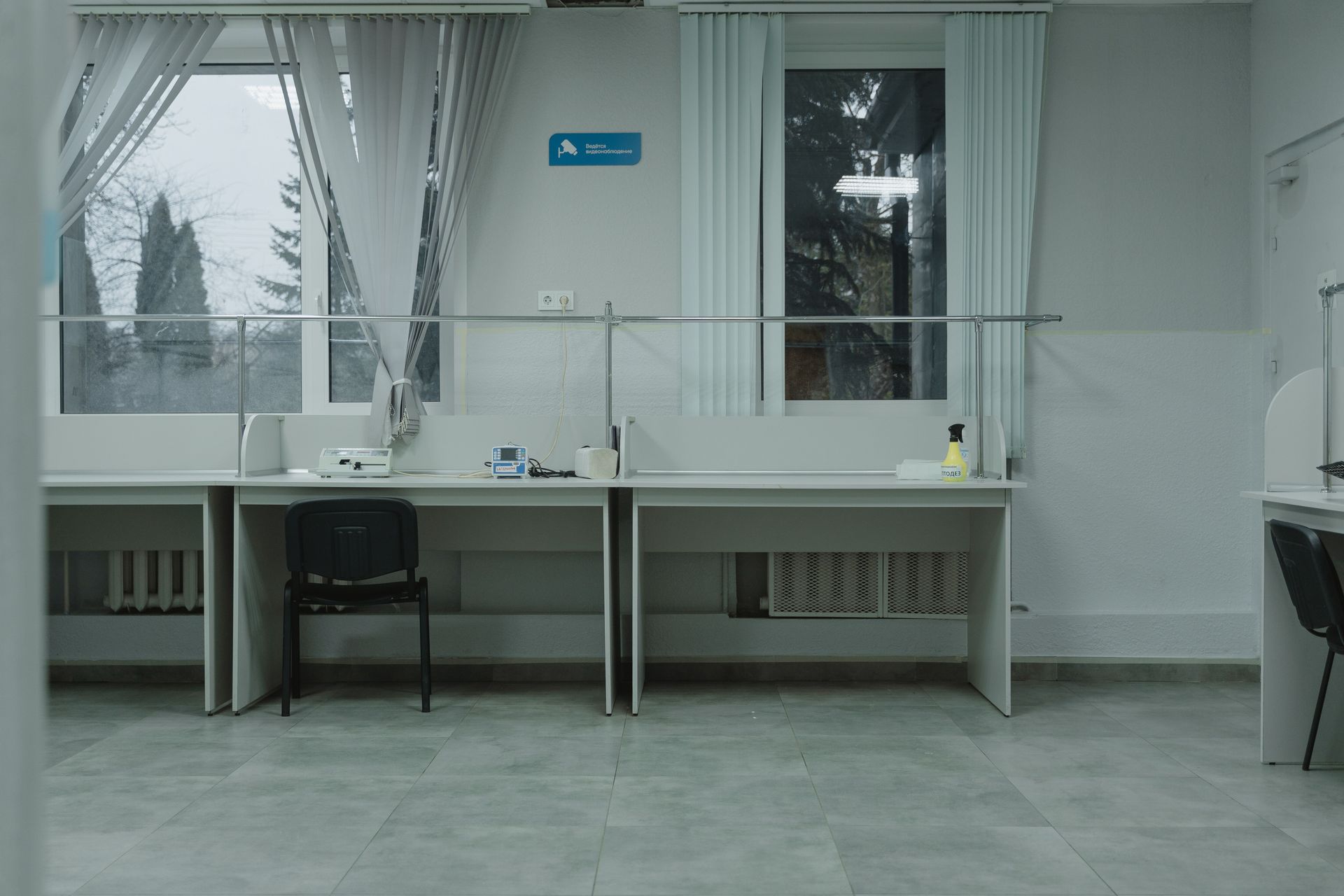
The cleaning requirements inside a bank branch are not uniform across the floor plan. Lobby and customer waiting areas accumulate typical foot-traffic debris and require consistent mopping and surface reset. Teller stations involve a different level of detail—transaction surfaces, counter edges, and the areas around transaction equipment collect particulate and residue that accumulates in ways not visible during a quick wipe-down but noticeable to customers at close range. LRE Cleaning Service LLC sequences teller area cleaning distinctly from lobby work, addressing the detail components before the broader floor mopping so that debris dislodged during detailed work is picked up in the mop pass that follows.
After a completed cleaning visit, the observable result in a bank lobby is a reset that reads as institutional rather than just tidy—floors with the film of daily foot traffic removed, restrooms sanitized and restocked, and transaction surfaces free of the smudging and residue that accumulates by end of business. For banking centers in communities where the branch is a visible anchor institution, that maintained appearance is part of how the facility presents itself to customers who walk in the next morning.
Security access coordination is handled during the initial walkthrough, not improvised on the first cleaning night. The crew is briefed on the institution's specific entry requirements, alarm procedures, and any restricted zones before the first visit, so there are no access issues that delay or interrupt the cleaning sequence once service begins.
What to Know About Bank Cleaning Before Service Starts
Financial institutions considering professional cleaning services often have specific questions about how crew accountability, access, and cleaning detail are managed—particularly in facilities with restricted areas and high-visibility public spaces.
How is security access handled during after-hours cleaning visits?
Access points, alarm codes, and any restricted areas are documented during the business-hours walkthrough before cleaning begins. The crew follows the institution's established entry and exit protocol on every visit, and the same trained employees return on each scheduled night rather than rotating unfamiliar staff through the location.
What does detailed cleaning around teller stations actually involve?
Teller station cleaning includes the transaction counter surface, the recessed edges and corners where particulate collects near equipment, and the customer-side counter face. This work is done carefully to avoid displacing cash-handling equipment and uses methods appropriate to the surfaces and finishes at each station.
Why does the cleaning start time matter for bank facilities?
Financial institutions in Chaffee and the surrounding region close at varying times, and starting cleaning too early risks overlap with staff still on site during end-of-day cash reconciliation. The 3:30 PM or later start is structured to respect that operational reality while still allowing enough time to complete all interior zones before the facility needs to be locked and secured for the night.
What surfaces are included in the restroom sanitizing component?
Restroom sanitizing covers toilet fixtures, sink basins, faucet hardware, door handles and push plates, and high-contact surfaces like paper towel dispensers and soap dispensers. Floors are mopped after fixture work is complete so runoff from sanitizing does not remain on the floor surface.
How does the cleaning approach differ between a customer lobby and a back-office area?
Lobby and customer-facing areas receive a higher-detail standard on visible surfaces—floors, counters, glass, and entry points—because those are the spaces customers evaluate. Back-office and administrative areas are maintained for cleanliness and hygiene but the sequencing prioritizes the customer-facing zones first to ensure those are fully addressed within the available cleaning window.
LRE Cleaning Service LLC also provides bank and financial institution cleaning in Cape Girardeau and Jackson. To discuss access requirements, cleaning specifications, and scheduling for your branch or financial facility, request a walkthrough with the crew.